Latest Posts
Why PTFE Sheet Is the Go-To Solution for Industrial Guide Rail Lining
Introduction
Guide rails are the backbone of countless industrial machines — injection molding machines, stamping presses, food packaging equipment, machine tools, and more. They guide heavy components through millions of precisely controlled movements, day after day, year after year.
But guide rails face a persistent challenge: friction.
Metal rails sliding against metal components generate heat, consume energy, and wear down over time. Lubrication helps — but in many environments, oil and grease are either impractical or completely prohibited. Food processing plants cannot risk oil contamination. Cleanrooms cannot tolerate airborne lubricant particles. Ovens bake lubricants into carbon deposits. And in every case, metal-on-metal contact eventually leads to wear, stick-slip, and costly downtime.
PTFE sheet, bonded to guide rail surfaces as a wear-resistant liner, solves all of these problems. This article explains why PTFE sheet has become the go-to solution for industrial guide rail lining — and why it delivers longer equipment life, lower maintenance costs, and more consistent production quality.
The Problem: Why Traditional Guide Rails Fail
Metal-on-Metal Wear
In a conventional guide rail system, metal slides against metal. Despite lubrication, the sliding surfaces experience continuous abrasion. Over time, the rail surface wears unevenly, creating grooves, high spots, and dimensional inaccuracies. The moving component no longer tracks straight — leading to misalignment, increased friction, and eventual component failure.
The cost of rail wear is significant:
-
Loss of precision — Parts no longer meet specifications
-
Increased scrap rates — Rework and waste
-
Downtime — Unscheduled repairs and adjustments
-
Replacement costs — Rail resurfacing or replacement is expensive
The Lubrication Problem
In many industrial environments, conventional lubrication is not an option:
| Environment | Why Oil Fails |
|---|---|
| Food Processing | Oil contaminates products — health and safety risk |
| Cleanrooms | Oil particles compromise cleanliness |
| Ovens/High Heat | Oil bakes into carbon deposits, becomes abrasive |
| Underwater | Oil disperses, washes away, or contaminates water |
| Vacuum | Oil outgasses, contaminates the vacuum environment |
| Dusty Environments | Oil attracts dust, creates grinding paste |
Stick-Slip: The Precision Killer
When a heavy slide is driven by a hydraulic or mechanical actuator, the static friction (the force required to start movement) is higher than the dynamic friction (the force required to keep it moving). This difference causes a phenomenon called stick-slip: the slide hesitates, jumps forward, hesitates again — creating jerky, uncontrolled motion that ruins precision.
Stick-slip is most severe at low speeds. In machine tools, it appears as chatter marks on the workpiece. In injection molding machines, it causes inconsistent clamping pressure. In food packaging equipment, it leads to inconsistent seals.
The Solution: PTFE Sheet Guide Rail Lining
How PTFE Sheet Works
PTFE sheet is bonded to the metal guide rail surface. The moving component — whether a slide, a clamping unit, or a carriage — rides on the PTFE surface rather than directly on the metal rail.
This changes the friction pair from metal-on-metal to PTFE-on-metal.
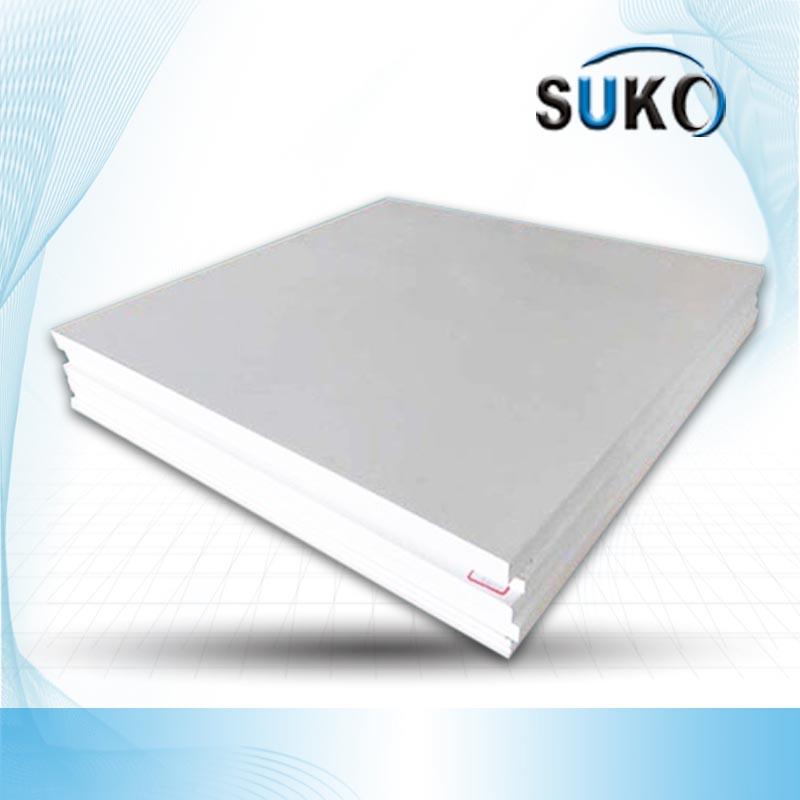
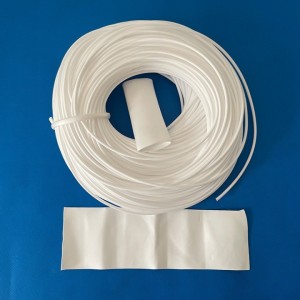
PTFE Sheet for Guide Rail Lining
PTFE (polytetrafluoroethylene) is a fluoropolymer with unique properties that make it ideal for guide rail lining:
Ultra-Low Friction
PTFE has one of the lowest coefficients of friction of any solid material — typically ≤0.04. For comparison:
| Material Pair | Coefficient of Friction |
|---|---|
| Steel on steel (lubricated) | 0.05–0.10 |
| Steel on steel (dry) | 0.15–0.30 |
| PTFE on steel (dry) | 0.04–0.08 |
PTFE requires no lubrication. It is self-lubricating, meaning it slides smoothly even in dry-running conditions.
Static and Dynamic Friction Nearly Equal
Unlike most materials, PTFE has nearly identical static and dynamic friction coefficients. This means:
-
No static friction “spike” to overcome
-
No stick-slip
-
Smooth startup and precise positioning
-
Better surface finish on machined parts
Extreme Temperature Range
PTFE sheet performs reliably from -180°C to +260°C. This makes it suitable for:
-
Cryogenic applications
-
High-temperature ovens and dryers
-
Steam-sterilized equipment
-
Outdoor equipment exposed to extreme weather
Corrosion Resistance
PTFE is chemically inert. It resists cutting fluids, mild acids, steam, alkalis, and most chemicals. In corrosive environments where metal guide rails would rust or pit, PTFE-lined rails continue to perform.
Wear Protection (Sacrificial Layer)
The PTFE sheet acts as a sacrificial layer. Wear occurs on the PTFE sheet — not on the expensive metal rail. When the sheet eventually wears down, it is peeled off and replaced with a new strip. The metal rail underneath remains pristine.
This transforms a major rail overhaul — which requires disassembly, resurfacing, and days of downtime — into a simple, in-place maintenance task that takes minutes.
Performance Comparison
| Property | Metal-on-Metal (Lubricated) | Metal-on-Metal (Dry) | PTFE Sheet on Metal |
|---|---|---|---|
| Friction coefficient | 0.05–0.10 | 0.15–0.30 | 0.04–0.08 |
| Stick-slip | Present | Severe | Eliminated |
| Lubrication required | Yes | Yes | No |
| Rail wear | Moderate | Severe | None (sacrificial layer) |
| Replacement time | Days (rail resurfacing) | Days | Minutes (replace tape) |
| Temperature range | -20°C to 120°C | -20°C to 120°C | -180°C to +260°C |
| Chemical resistance | Limited | Limited | Excellent |
Industry Applications
Injection Molding Machines
Injection molding machine clamping units cycle tens of thousands of times daily. The guide rails must maintain precise alignment under heavy loads. Oil contamination on the mold surface scraps entire production batches — making PTFE’s dry-running capability essential. PTFE sheet lining eliminates oil-related risks, prevents rail wear, and maintains clamping precision across millions of cycles.
Food Packaging Equipment
Food packaging sealing mechanism guide rails cannot use lubricants. Oil mist or drips contaminate packaging materials and trigger product recalls. PTFE sheet is FDA-compliant, runs dry, maintains an ultra-low friction coefficient, and performs reliably even inside 260°C oven environments.
Machine Tools (Mills, Lathes)
At low feed rates, stick-slip is the primary cause of poor surface finish. Metal guide rails have a static friction coefficient higher than dynamic friction — the slide hesitates, jumps, hesitates again, leaving chatter marks on every workpiece. PTFE sheet has static and dynamic friction coefficients that are nearly identical, eliminating stick-slip entirely. The slide moves smoothly and precisely at any feed rate.
Why SUKO’s PTFE Sheet Is Different
Most PTFE parts manufacturers buy off-the-shelf machines and work within whatever precision those machines offer. SUKO took a different path: we design and build our own production equipment — including high-precision automatic molding machines, ram extruders, and sintering furnaces.

Automatic PTFE Hydraulic Press Moulding Machine
From pressure control and temperature profiles to final machining, we control every variable. When we want tighter tolerances, we tune our machines to deliver them. Not by inspection, but at the equipment level. That’s how we hold this PTFE sheet to ±0.05mm thickness tolerance, batch after batch.
Case in Point
Our Thailand-based customer Thiti regularly orders this PTFE sheet in 50mm × 5mm × 1.2m size — the industry’s most standard size for guide rail lining. He chose SUKO because local suppliers couldn’t hold consistent thickness — shipments varied batch to batch, causing rework during installation. We hold it to ±0.05mm, every batch. That’s because we build our own machines and tune them to that precision — not just measure it after the fact.
Frequently Asked Questions
Q: Does PTFE sheet require lubrication?
A: No. PTFE is self-lubricating. It requires no oil or grease.
Q: What is the coefficient of friction?
A: ≤0.04 — among the lowest of any solid material.
Q: Does PTFE sheet eliminate stick-slip?
A: Yes. Static and dynamic friction coefficients are nearly identical, eliminating stick-slip entirely.
Q: What is the temperature range?
A: -180°C to +260°C continuous operation.
Q: How long does PTFE sheet last?
A: Service life varies by application. In typical guide rail service, 2–5 years before requiring replacement.
Q: What thickness tolerance does SUKO hold?
A: ±0.05mm, batch after batch.
Q: Can sizes be customized?
A: Yes — custom widths, thicknesses, lengths, and cut-outs available.
Q: What industries use PTFE sheet for guide rail lining?
A: Injection molding, stamping/pressing, food packaging, machine tools, elevators, woodworking, paper manufacturing, and more.
Conclusion
Guide rail wear and stick-slip are persistent problems in industrial machinery — problems that lead to precision loss, increased scrap rates, downtime, and costly repairs. Traditional solutions rely on lubrication and metal-on-metal contact, both of which have fundamental limitations.
PTFE sheet guide rail lining offers a fundamentally better solution:
-
No lubrication — Suitable for food plants, cleanrooms, ovens, underwater, and vacuum
-
No stick-slip — Smooth startup and precise positioning
-
Protects metal rails — Sacrificial layer takes the wear, rail stays new
-
Minute-long replacement — Not days-long overhaul
-
Wide temperature range — -180°C to +260°C
SUKO’s PTFE sheet is manufactured in-house with ±0.05mm thickness tolerance — delivering consistent performance, batch after batch.
SUKO Polymer Machine Tech Co., Ltd.
-
Email: info@sukoptfe.com
-
Phone/WhatsApp: +86 19975113419
Custom PTFE Parts? Ask the Manufacturer Who Builds the Machines.
Submit your design requirements and get a quote directly from the source - factory price, full control, quick response.
 English
  Russian
  Portuguese
  Arabic