Latest Posts
Why PTFE Pipe Is the Only Reliable Solution for Chlor-Alkali Caustic Soda Conveying
Introduction
The chlor-alkali industry is one of the largest and most demanding sectors in chemical manufacturing. Through the electrolysis of brine, it produces three essential industrial chemicals: chlorine, hydrogen, and caustic soda (sodium hydroxide). The global chlor-alkali market was valued at approximately USD 58–90 billion in 2025 and is projected to grow at a CAGR of 3–5% through the next decade.
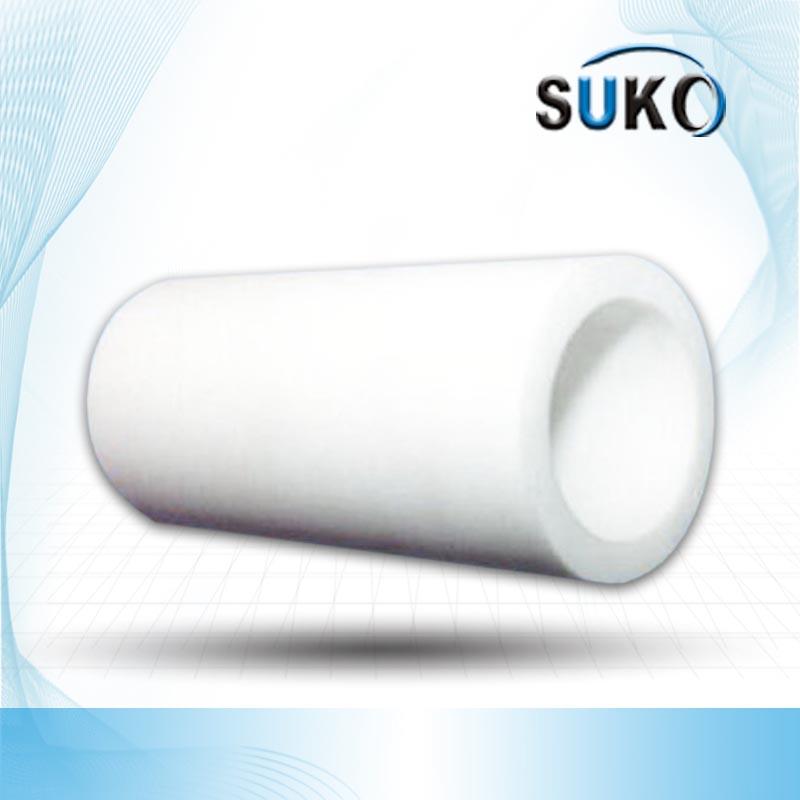
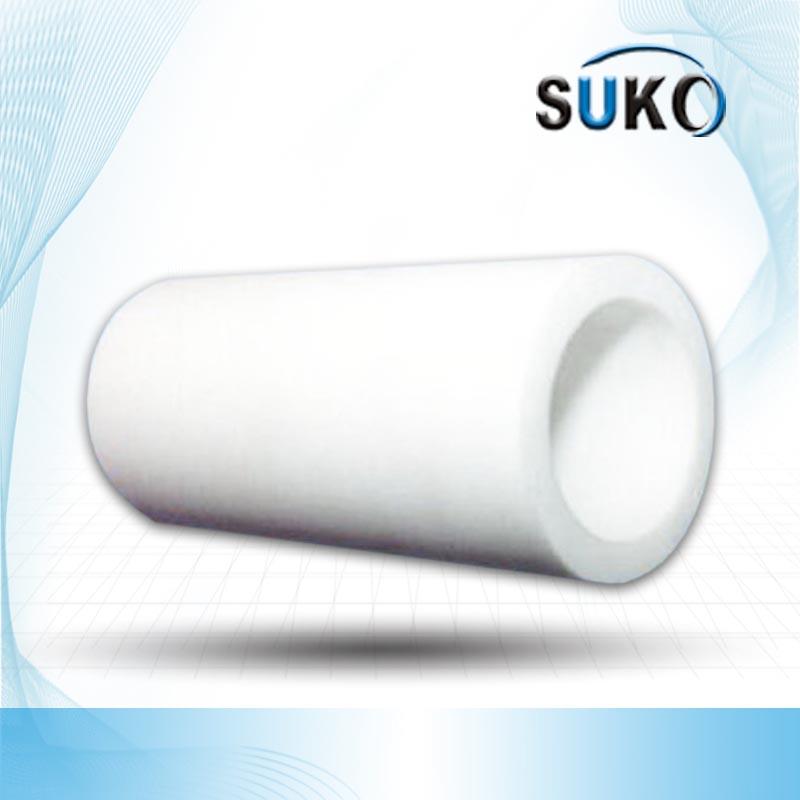
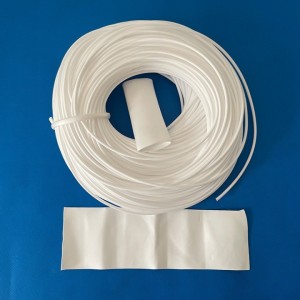
Large Diameter PTFE Tube
But here’s the challenge: these products are among the most corrosive substances in industrial processing.
Caustic soda at 32% concentration, hydrochloric acid, and wet chlorine gas are all produced and transported at elevated temperatures — typically 80°C and above. The piping systems that carry these media face a continuous battle against corrosion. And when pipes fail, the consequences are severe: production downtime, safety hazards, environmental violations, and millions in unplanned costs.
This article examines why PTFE (polytetrafluoroethylene) pipe has become the only reliable solution for chlor-alkali caustic soda conveying — and why metal pipes simply cannot compete.
The Problem: Metal Pipes Fail. Repeatedly. Expensively.
In chlor-alkali plants, 32% caustic soda is typically conveyed through DN50–DN500 pipelines from electrolyzers to evaporation and concentration stages. The fluid temperature is approximately 80°C.
For decades, plant engineers have specified 304 stainless steel for these lines. And for decades, they have watched them fail.
The data is alarming:
-
At 80°C in 32% caustic soda service, 304 stainless steel pipes develop pitting corrosion within 6 months
-
Pitting is caused by chloride ions attacking the passive oxide layer on stainless steel surfaces
-
Once pitting begins, it accelerates — leading to through-wall perforation and leakage
-
A chlor-alkali plant in Southeast Asia reported that 304 stainless steel pipes required replacement every 6 months, with each failure causing production stoppages and safety incidents
The cost of metal pipe failure is staggering:
-
Direct costs: Pipe replacement materials and labor
-
Indirect costs: Production downtime, lost output, disposal of contaminated media
-
Hidden costs: Safety inspections, environmental compliance reporting, increased insurance premiums
-
Worst-case costs: Environmental fines, injury claims, reputation damage
One chlor-alkali facility documented that frequent hydrochloric acid pipe replacements cost them over $1 million annually in losses.
What About Other Materials?
Some plants have tried alternatives:
| Material | Problem |
|---|---|
| Carbon steel | Rapid general corrosion in caustic and acid service |
| 304/316 Stainless Steel | Pitting corrosion from chlorides; stress corrosion cracking in caustic |
| Alloy 20 / Hastelloy | Extremely expensive — 5–10× the cost of PTFE solutions |
| Rubber-lined pipe | Degrades at high temperatures; requires frequent relining |
| FRP/GRP | Limited temperature and pressure capability; permeation issues |
The reality: In chlor-alkali service at 80°C with 32% caustic soda, no metallic material offers both corrosion resistance and cost-effectiveness. Exotic alloys like Hastelloy can resist corrosion — but at prices that make them economically unviable for long pipeline runs.
The Solution: PTFE Pipe — 5+ Years, Zero Wall Thickness Change
PTFE (polytetrafluoroethylene) is fundamentally different from metals.
PTFE is a fluoropolymer with exceptional chemical inertness. It is resistant to virtually all industrial chemicals — including concentrated acids, alkalis, and oxidizing agents — except molten alkali metals and elemental fluorine.
The performance comparison is stark:
| Parameter | 304 Stainless Steel | PTFE Pipe |
|---|---|---|
| Service life in 32% caustic at 80°C | 6 months | 5+ years |
| Wall thickness change | Significant | Zero |
| Maintenance frequency | Every 6 months | None |
| Annual maintenance cost | High | 80% reduction |
| Leakage risk | High | Near zero |
| Product contamination risk | Yes (metal ions) | No |
After switching from 304 stainless steel to PTFE pipe, one chlor-alkali plant achieved 5 years of continuous operation without wall thickness change and reduced annual maintenance costs by 80%.
Where PTFE Pipe Is Used in Chlor-Alkali Plants
PTFE pipe serves multiple critical applications across chlor-alkali facilities:
1. 32% Caustic Soda Main Pipelines
The largest-volume application. Electrolyzers produce caustic soda at approximately 80°C, which must be conveyed to evaporation and concentration stages. PTFE pipe handles this service indefinitely.
2. Hydrochloric Acid Conveying
Many chlor-alkali plants produce hydrochloric acid as a co-product. PTFE pipe resists hydrochloric acid at all concentrations and temperatures.
3. Wet Chlorine Gas Transport
Chlorine gas produced by electrolysis is saturated with moisture — forming highly corrosive hydrochloric acid. PTFE pipe is one of the few materials that can handle wet chlorine without degradation.
4. Brine and Salt Slurry Lines
Raw brine and salt slurries contain abrasive particulates and chlorides. PTFE pipe’s low friction surface reduces abrasion and prevents scale buildup.
5. Chemical Waste Disposal
Chlor-alkali plants generate corrosive waste streams. PTFE pipe safely conveys these to treatment facilities.
Why SUKO’s PTFE Pipe Is Different
Most PTFE pipe manufacturers buy off-the-shelf extruders and work within whatever specifications those machines offer. SUKO took a different path.
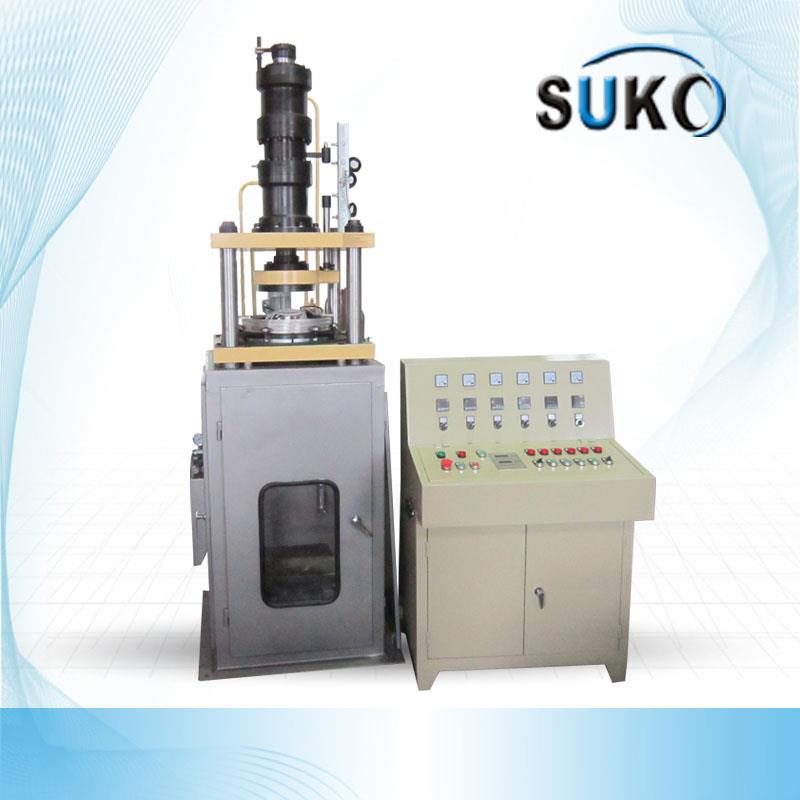
PTFE Tube Ram Extruder Machine PFG500 Dia 300mm-500mm
SUKO designs and builds its own PTFE production equipment — including ram extruders and sintering ovens. This gives complete control over:
-
Extrusion pressure — ensuring uniform density and wall thickness
-
Temperature profiles — optimizing material properties throughout the process
-
Sintering curves — achieving full crystallinity and mechanical strength
-
Final dimensions — holding tight tolerances across every batch
The result: PTFE pipe with consistent quality, batch after batch, in diameters from 5mm to 500mm.
Technical Specifications
| Parameter | Specification |
|---|---|
| Material | 100% virgin PTFE |
| Diameter Range | 5mm – 500mm |
| Operating Temperature | -180°C to +260°C |
| Pressure Rating | Customized by wall thickness |
| Process | Ram extrusion + in-house sintering |
| Fillers Available | Glass fiber, carbon, graphite, bronze, MoS₂ |
Frequently Asked Questions
Q: How long does PTFE pipe last in 32% caustic soda service?
A: At 80°C, PTFE pipe shows no wall thickness change after 5+ years of continuous service — compared to 304 stainless steel which pits within 6 months.
Q: What is the maximum operating temperature for PTFE pipe?
A: PTFE maintains its mechanical properties up to +260°C continuously, and as low as -180°C.
Q: Can PTFE pipe handle wet chlorine?
A: Yes. PTFE is one of the few materials that resists wet chlorine gas without degradation.
Q: What chemicals attack PTFE?
A: Only molten alkali metals, elemental fluorine, chlorine trifluoride, and a few other highly reactive species at elevated temperatures.
Q: What diameter range can SUKO supply?
A: 5mm to 500mm standard. Custom diameters available on request.
Q: Do you outsource extrusion or sintering?
A: No. SUKO operates in-house ram extruders and sintering ovens — full quality control from raw material to finished pipe.
Q: Can PTFE pipe be reinforced with fillers?
A: Yes — glass fiber, carbon, graphite, bronze, and molybdenum disulfide fillers are available for enhanced mechanical properties, thermal conductivity, or wear resistance.
Conclusion
The chlor-alkali industry faces a fundamental challenge: conveying highly corrosive media at elevated temperatures without risking equipment failure, production downtime, or safety incidents. Metal pipes — whether carbon steel, stainless steel, or exotic alloys — either corrode rapidly or are economically unviable.
PTFE pipe offers the only practical solution. With 5+ years of service life in 32% caustic soda at 80°C, zero wall thickness change, and 80% reduction in maintenance costs, PTFE has proven itself as the material of choice for chlor-alkali piping.
SUKO’s in-house manufacturing capability — from ram extrusion to sintering — ensures consistent quality across diameters from 5mm to 500mm. When metal pipes fail and production stops, PTFE pipe keeps the process running.
SUKO Polymer Machine Tech Co., Ltd.
-
Email: info@sukoptfe.com
-
Phone/WhatsApp: +86 19975113419
Custom PTFE Parts? Ask the Manufacturer Who Builds the Machines.
Submit your design requirements and get a quote directly from the source - factory price, full control, quick response.
 English
  Russian
  Portuguese
  Arabic