Últimos Posts
Why Seawater Desalination Needs ePTFE Hollow Fiber Membrane and Tube — A Focus on the Arab Region
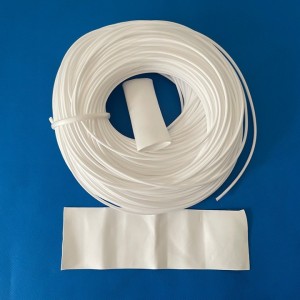
The Arab Water Crisis: A Matter of Survival
Water scarcity is not an abstract environmental concern for the Arab region — it is a matter of daily survival. The Arabian Peninsula is one of the driest regions on Earth, with natural freshwater resources so limited that GCC countries now depend heavily on desalination for their water supply. Decades of rapid population growth, urbanization, and industrial development have pushed demand far beyond what groundwater and rainfall can sustain.
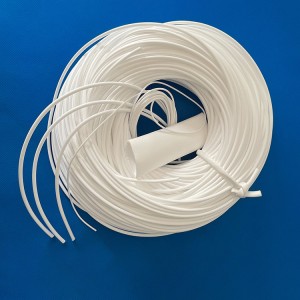
ePTFE Hollow Fiber Membrane and Tube
The scale of the challenge is staggering. The Middle East and Africa region dominates the global desalination market, holding a 52.95% market share in 2024. GCC nations collectively represent over 45 percent of global desalination capacity, with more than 8,950 desalination plants operating in the region. Saudi Arabia alone contributes approximately 20 percent of global capacity.
Saudi Arabia’s desalination capacity is set to increase from 5.6 million cubic meters per day in 2022 to 8.5 million in 2025, and it will have to cover more than 90% of the country’s water consumption. The same holds for the UAE. By 2050, freshwater production by desalination plants is projected to increase more than sixfold compared to today’s levels.
Why Traditional Desalination Has Limits — And Why Arab Nations Are Looking for Better Solutions
The Arab region has relied heavily on thermal desalination technologies — Multi-Stage Flash (MSF) and Multi-Effect Distillation (MED) — for decades. These processes are energy-intensive and capital-intensive, consuming vast amounts of fossil fuels. In an era of decarbonization and rising energy costs, this model is increasingly unsustainable.
Reverse Osmosis (RO) has gained ground as a more energy-efficient alternative. The UAE’s Taweelah desalination plant, the world’s largest RO facility, produces approximately 900,000 tons of freshwater daily near Abu Dhabi. Dubai’s Hassyan complex, another mega-RO project, is expected to reach full completion in Q1 2027.
But RO has its own limitations — high-pressure operation, membrane fouling, and most critically, the challenge of brine disposal. The Arabian Gulf, where most Gulf desalination plants operate, has historically high salinity levels, and brine discharge from hundreds of plants significantly affects local marine ecosystems. The region faces a pressing need for technologies that can concentrate brine further — reducing environmental impact while recovering more water and valuable minerals.
Membrane Distillation: The Next Generation for the Gulf
Membrane Distillation (MD) is emerging as a promising solution, particularly for the challenging conditions of the Arabian Gulf. MD is a thermal-driven process that uses a hydrophobic microporous membrane to separate water vapor from liquid feed. Unlike RO, MD operates at near-atmospheric pressure, reducing energy costs, and can utilize low-grade waste heat — a resource abundant in the Gulf’s industrial sector.
MD also delivers salt rejection rates of ≥99.9%, making it ideal for treating high-salinity feed water and concentrating RO brine. For Gulf nations committed to Zero Liquid Discharge (ZLD) — a goal increasingly embedded in Saudi Vision 2030 and UAE sustainability strategies — MD represents a critical enabling technology.
ePTFE Hollow Fiber Membrane and Tube
Why ePTFE Hollow Fiber Is the Only Viable Membrane for Gulf MD
The success of MD depends entirely on the membrane. The feed water in the Arabian Gulf is highly saline, warm, and biologically active. Membranes must resist fouling, chemical attack, and thermal degradation.
PVDF and PP hollow fiber membranes — the conventional choices — fail under these conditions. They degrade under chlorine exposure, soften at elevated temperatures, lose hydrophobicity, and suffer from low tensile strength.
ePTFE (expanded polytetrafluoroethylene) is fundamentally different.
-
Superior chemical resistance — pH 0–14 tolerance. Resists chlorine, ozone, sodium hypochlorite — the cleaning agents used in every desalination plant. No swelling, no degradation.
-
Extreme temperature range — Continuous operation from -190°C to +280°C. Gulf seawater is warm; MD operates at 60–80°C; ePTFE handles it easily.
-
Strong hydrophobicity — Contact angle ≥128° (up to 152° with treatment). Prevents membrane wetting — the most common and catastrophic failure mode in MD.
-
High salt rejection — ≥99.9% in vacuum membrane distillation (VMD) mode.
-
High tensile strength — Resists breakage during operation, backwashing, and handling.
-
Customizable pore structure — Pore size from 0.05μm to 1.0μm, optimized for specific applications.
Research has demonstrated the effectiveness of PTFE hollow fiber membranes for treating high-salinity Persian Gulf seawater using solar-assisted air gap membrane distillation. Studies on vacuum membrane distillation (VMD) with PTFE hollow fiber membranes have shown strong performance in concentrating brine from RO desalination plants. Multiple-effect membrane distillation (MEMD) using PTFE hollow fiber membranes has been developed for deep concentration of high-salinity solutions.
SUKO’s 14 Years of ePTFE Expertise — Serving the Arab Region
SUKO has been developing ePTFE technology since 2012 — 14 years of continuous research and manufacturing. Our ePTFE hollow fiber membranes and tubes have been deployed across multiple demanding industrial sectors, including seawater desalination, chemical wastewater treatment, pharmaceutical filtration, semiconductor ultrapure water, and high-temperature flue gas treatment.
We understand the specific challenges of the Gulf environment — the high salinity, the warm feed water, the aggressive cleaning protocols required to control biofouling. Our ePTFE hollow fiber products are engineered to withstand these conditions, delivering 3–5+ years of service life — significantly longer than PP or PVDF alternatives.
Specifications
| Parameter | Specification |
|---|---|
| Material | 100% virgin ePTFE |
| Fiber/Tube ID | 0.5 – 3.0mm |
| Fiber/Tube OD | 1.3 – 4.0mm |
| Wall Thickness | 0.1 – 0.8mm |
| Pore Size | 0.05 – 1.0μm (customizable) |
| Operating Temperature | -190°C to +280°C |
| Chemical Resistance | pH 0–14 |
| Contact Angle | ≥128° (up to 152°) |
| Salt Rejection | ≥99.9% |
Conclusion
The Arab region’s water security depends on desalination — and the next generation of desalination depends on membrane technology that can handle the Gulf’s challenging conditions.
ePTFE hollow fiber membrane and tube deliver:
-
≥99.9% salt rejection — consistently high-quality water
-
-190°C to +280°C — handles Gulf temperatures with ease
-
pH 0–14 chemical resistance — withstands aggressive cleaning
-
Contact angle ≥128° — prevents wetting, ensures stable operation
-
3–5+ year service life — lower total cost of ownership
-
Customizable — pore size, dimensions tailored to your application
SUKO has 14 years of ePTFE experience across desalination, chemical, pharmaceutical, semiconductor, and industrial filtration applications. We understand not just how to make ePTFE hollow fiber products, but how they perform in the real world — and we’re ready to support the Arab region’s water security goals.
SUKO Polymer Machine Tech Co., Ltd.
-
Email: info@sukoptfe.com
-
Phone/WhatsApp: +86 19975113419
Produtos relacionados
Peças personalizadas de PTFE? Pergunte ao fabricante que constrói as máquinas.
Submit your design requirements and get a quote directly from the source - factory price, full control, quick response.
 English
  Russian
  Portuguese
  Arabic