Últimos Posts
Why ePTFE Tube Outperforms PP/PE/PVC in Industrial Filtration
Introduction
Industrial filtration is the backbone of countless manufacturing processes — from chemical production and pharmaceutical manufacturing to semiconductor fabrication and environmental treatment. The filter media used in these applications must withstand aggressive chemicals, extreme temperatures, and continuous operation without failure.
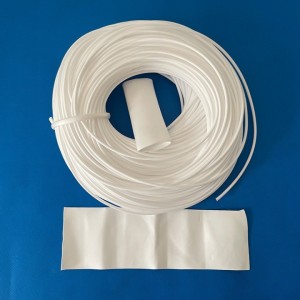
ePTFE Tube for Industrial Filtration
For decades, conventional plastic filter tubes made from polypropylene (PP), polyethylene (PE), and polyvinyl chloride (PVC) have been the default choice. They are inexpensive, widely available, and adequate for mild service conditions.
But in demanding industrial environments — strong acids, concentrated alkalis, high temperatures, chlorine-containing streams — these materials fail. Rapidly. Expensively. And often without warning.
ePTFE (expanded polytetrafluoroethylene) tube offers a fundamentally different solution. This article explains why ePTFE outperforms conventional plastics in industrial filtration — and why it delivers 5–10× longer service life with zero degradation.
The Problem: Why PP, PE, and PVC Filter Tubes Fail
Conventional plastic filter tubes have inherent limitations that become critical failure points in demanding industrial filtration applications.
Chemical Attack
PP, PE, and PVC are hydrocarbons. They are susceptible to attack from:
-
Strong acids — Sulfuric acid, hydrochloric acid, nitric acid cause swelling, cracking, and embrittlement
-
Strong alkalis — Sodium hydroxide degrades PVC and attacks PP/PE over time
-
Oxidizers — Chlorine, ozone, and hypochlorite break down polymer chains
-
Organic solvents — Many solvents swell or dissolve these materials
In concentrated acid service at elevated temperatures, PP/PE/PVC tubes typically fail within 3–6 months. Failure modes include swelling (loss of dimensional stability), cracking (loss of structural integrity), and complete breakdown (loss of filtration function).
Temperature Limits
Conventional plastics have narrow temperature ranges:
| Material | Maximum Continuous Temperature | Minimum Temperature |
|---|---|---|
| PP | 80°C | 0°C |
| PE | 60°C | -20°C |
| PVC | 60°C | -10°C |
| ePTFE | 260°C | -200°C |
Above these temperatures, PP/PE/PVC soften, deform, and lose mechanical strength. Below these temperatures, they become brittle and crack under stress.
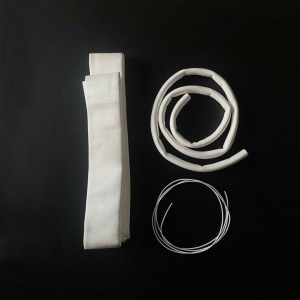
ePTFE Tube for Industrial Filtration
Extractables and Contamination
PP, PE, and PVC contain plasticizers, stabilizers, and other additives that can leach into the product stream. In pharmaceutical, semiconductor, and food applications, this contamination is unacceptable.
The Cost of Failure
When a filter tube fails in an industrial process:
-
Production stops — Downtime costs can exceed thousands of dollars per hour
-
Product is lost — Contaminated batches must be discarded
-
Equipment is damaged — Downstream equipment can be affected
-
Safety is compromised — Leaks of hazardous chemicals create safety risks
-
Regulatory compliance is at risk — Environmental and quality violations
One chemical plant documented that replacing failed PP filter tubes in sulfuric acid service cost them over $200,000 annually in materials, labor, and lost production.
The Solution: ePTFE Tube — 5–10× Longer Life with Zero Degradation
ePTFE is fundamentally different from PP, PE, and PVC. It is a fluoropolymer with a unique combination of properties that make it ideal for demanding filtration applications.
Exceptional Chemical Resistance
PTFE is chemically inert to virtually all industrial chemicals except molten alkali metals and elemental fluorine. This includes:
-
All acids — Sulfuric, hydrochloric, nitric, hydrofluoric, phosphoric
-
All alkalis — Sodium hydroxide, potassium hydroxide
-
All oxidizers — Chlorine, ozone, sodium hypochlorite, hydrogen peroxide
-
All solvents — Organic and inorganic solvents
This means ePTFE tubes do not swell, crack, degrade, or leach — regardless of the chemical environment.
Extreme Temperature Range
ePTFE maintains its mechanical properties from -200°C to +260°C. This enables filtration applications that are impossible with conventional plastics:
-
Hot acid filtration — Concentrated acids at 80–150°C
-
Hot alkaline streams — Caustic solutions at elevated temperatures
-
Flue gas filtration — Baghouse systems operating at 200°C+
-
Cryogenic filtration — Low-temperature gas and liquid processing
High Porosity, Low Pressure Drop
The biaxial stretching process used to manufacture ePTFE tubes creates a microporous structure with:
-
Porosity of 50%–85% — This means less material to block flow
-
Billions of uniform pores per square centimeter — Consistent filtration throughout
-
High flux rates — More throughput with less energy
In comparison, PP/PE/PVC tubes have lower porosity and higher pressure drop, meaning they require more energy to achieve the same flow rate.
No Extractables, No Contamination
ePTFE contains no plasticizers, stabilizers, or additives that can leach into the product stream. This makes it ideal for:
-
Pharmaceutical filtration — No contamination of drug products
-
Semiconductor processing — No trace contaminants affecting chip yields
-
Food and beverage — FDA-compliant, no extractables
Fouling Resistance and Cleanability
ePTFE’s low surface energy (approximately 18–24 mN/m) means:
-
Foulants do not adhere strongly — Less fouling during operation
-
Backwashing is highly effective — Flux recovery >90% after cleaning
-
Extended service life — Less frequent cleaning and replacement
Performance Comparison: ePTFE vs. PP/PE/PVC
| Property | PP/PE/PVC | ePTFE | Advantage |
|---|---|---|---|
| Chemical resistance | Limited | pH 0–14, all chemicals | ePTFE |
| Max temperature | 60–80°C | 260°C | ePTFE |
| Min temperature | -20 to 0°C | -200°C | ePTFE |
| Porosity | 40–60% | 50–85% | ePTFE |
| Extractables | Yes | None | ePTFE |
| Service life | 3–12 months | 5–10× longer | ePTFE |
| Flux recovery | 60–80% | >90% | ePTFE |
| Cost | Lower upfront | Higher upfront | PP/PE/PVC |
The ROI of ePTFE
While the upfront cost of ePTFE tubes is higher than PP/PE/PVC, the total cost of ownership is often lower due to:
-
5–10× longer service life — Fewer replacements
-
Reduced downtime — Less frequent change-outs
-
Lower energy consumption — Higher porosity means less pressure drop
-
Better product quality — No contamination from extractables
-
Less maintenance labor — Fewer interventions
Applications Requiring ePTFE
ePTFE tubes are essential in applications where conventional plastics cannot survive:
Chemical Processing
-
Concentrated sulfuric acid filtration
-
Hydrochloric acid service
-
Nitric acid processing
-
Sodium hydroxide streams
-
Aggressive organic solvents
Pharmaceutical and Biotechnology
-
Sterile filtration of solvents
-
Fermentation air filtration
-
Drug product filtration
-
Steam-sterilizable applications
Semiconductor Manufacturing
-
Ultra-pure water filtration
-
High-purity chemical filtration (etching, cleaning, photolithography)
-
Contamination-sensitive processes
Industrial Wastewater Treatment
-
PCB acid wash solutions
-
Electroplating waste liquids
-
Steel pickling acids
-
Landfill leachate treatment
High-Temperature Flue Gas
-
Waste incineration
-
Coal-fired power plants
-
Cement kilns
-
Metallurgical furnaces
-
Pulse-jet cleaning systems
Why SUKO’s ePTFE Tube Is Different
SUKO manufactures ePTFE tube from 100% virgin PTFE resin through a precision biaxial stretching process, ensuring:
-
Uniform pore size distribution — Consistent filtration performance throughout the tube
-
Batch-to-batch consistency — Every batch performs identically
-
Customizable pore sizes — From 0.05μm to 10μm
-
Custom dimensions — Diameters, wall thicknesses, and lengths to your specifications
SUKO has 14 years of experience in PTFE R&D and manufacturing, with products exported to more than 40 countries. Every batch undergoes rigorous performance testing to guarantee stable filtration precision and flow rate.

Custom PTFE Parts Manufacturer – Engineered by Suko Machinery | Suko
Frequently Asked Questions
Q: What chemicals does ePTFE resist?
A: pH 0–14, including strong acids, strong alkalis, oxidizers, and organic solvents. Only molten alkali metals and elemental fluorine attack PTFE.
Q: What is the temperature range for ePTFE tube?
A: -200°C to +260°C continuous operation.
Q: How long does ePTFE tube last compared to PP/PE/PVC?
A: 5–10× longer under the same service conditions.
Q: What pore sizes are available?
A: Customizable from 0.05μm to 10μm.
Q: Does ePTFE tube contain extractables?
A: No. ePTFE contains no plasticizers, stabilizers, or additives that can leach into the product stream.
Q: Can ePTFE tube be backwashed?
A: Yes. Flux recovery exceeds 90% after backwashing.
Q: What applications require ePTFE?
A: Chemical processing, pharmaceutical manufacturing, semiconductor fabrication, industrial wastewater treatment, and high-temperature flue gas filtration.
Q: Can pore size, diameter, and length be customized?
A: Yes. Custom pore sizes from 0.05μm to 10μm. Custom diameters, wall thicknesses, and lengths available upon request.
Conclusion
PP, PE, and PVC filter tubes have their place in mild service conditions. But in demanding industrial environments — strong acids, concentrated alkalis, high temperatures, and oxidizer-containing streams — they fail rapidly and expensively.
ePTFE tube offers a fundamentally better solution: 5–10× longer service life, zero degradation, no contamination, and stable performance across -200°C to +260°C and pH 0–14. While the upfront cost is higher, the total cost of ownership is often lower — and in many applications, ePTFE is the only material that can survive at all.
SUKO’s ePTFE tube is manufactured in-house with precision control over pore size, dimensions, and quality consistency — delivering reliable filtration performance across the most demanding industrial applications.
SUKO Polymer Machine Tech Co., Ltd.
-
Email: info@sukoptfe.com
-
Phone/WhatsApp: +86 19975113419
Produtos relacionados
Peças personalizadas de PTFE? Pergunte ao fabricante que constrói as máquinas.
Submit your design requirements and get a quote directly from the source - factory price, full control, quick response.
 English
  Russian
  Portuguese
  Arabic